
The Skin Journal · Skin Consultation
The mirror is a useful tool, but it doesn't show everything. Skin imaging helps us see pigment, texture and redness more clearly, and track change over time.
At Beauty Hub Sydney, we use OBSERV 520x skin analysis as part of consultations, including The Baseline.
Imaging supports professional assessment. It doesn't replace it, and it isn't a medical diagnosis.
Different views.
OBSERV 520x captures your skin under ten lighting modes. Each one makes different characteristics easier to see.
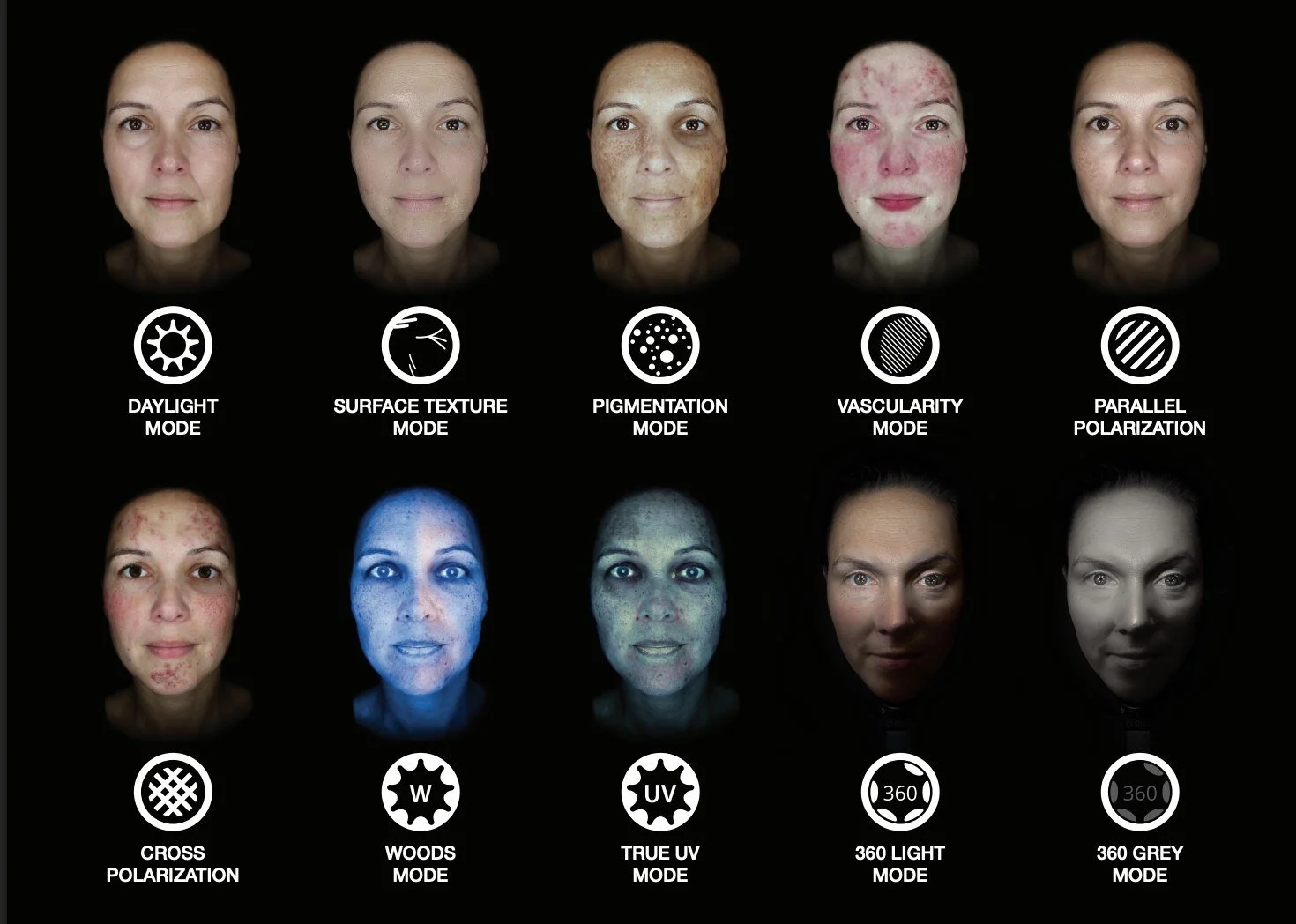
| Mode | Helps visualise |
|---|---|
| Daylight | Your skin as others see it, for overall tone and texture |
| Surface texture | Fine lines, pores and surface texture |
| Pigmentation | Visible pigment, such as sun spots and uneven tone |
| Vascularity | Redness and visible blood vessels |
| Parallel polarisation | Surface shine and fine texture |
| Cross polarisation | Redness, pigment and breakouts, with surface glare removed |
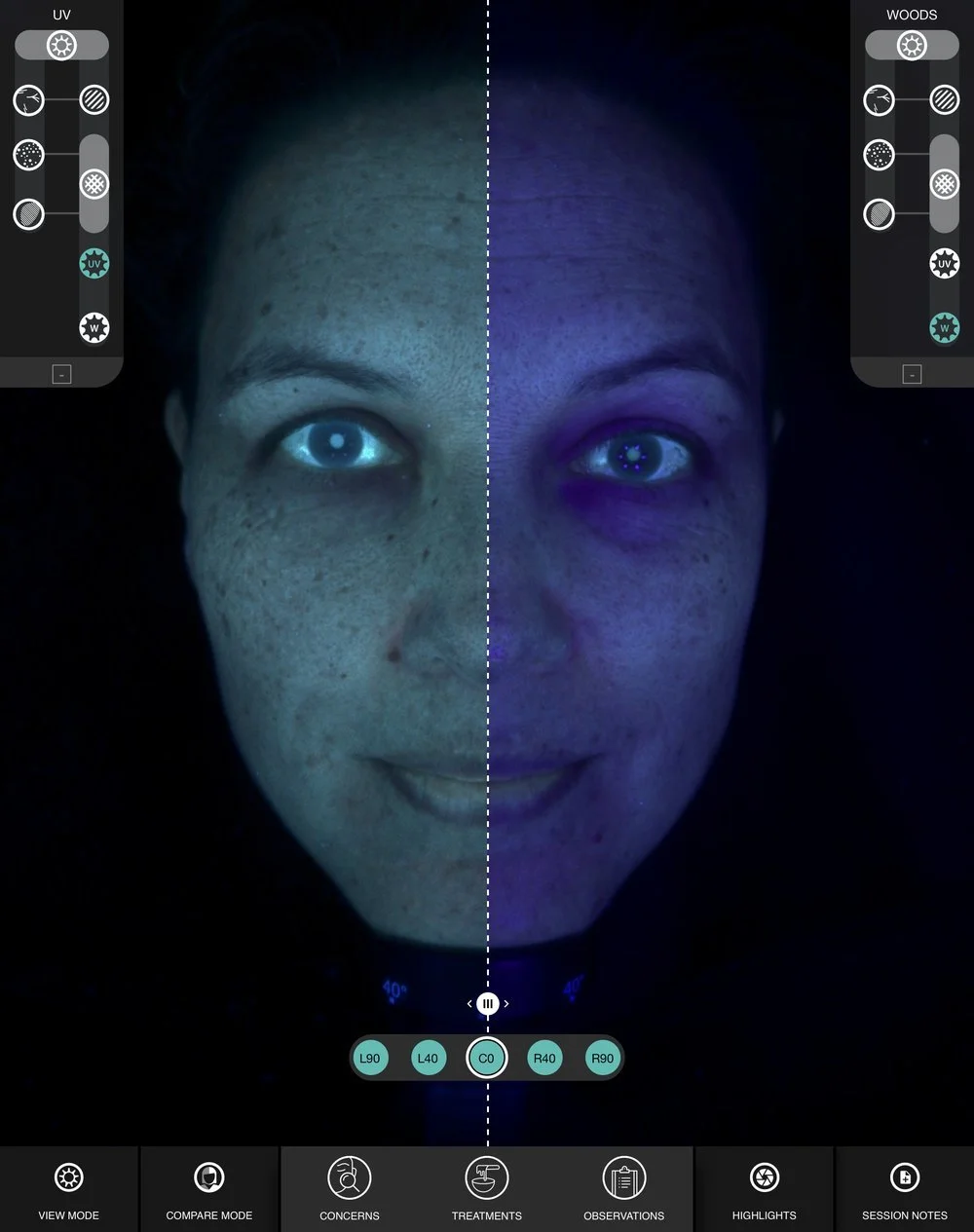
| Wood’s | Pigment and other characteristics less visible in normal light |
| True UV | Sun-related pigmentation that may not yet show at the surface |
| 360 light | Facial contour, volume and shadows |
| 360 grey | Contour and shadows in greyscale, without colour as a distraction |
Images need professional interpretation. Lighting, positioning and camera settings are kept consistent for fair comparisons.
Why we use imaging.
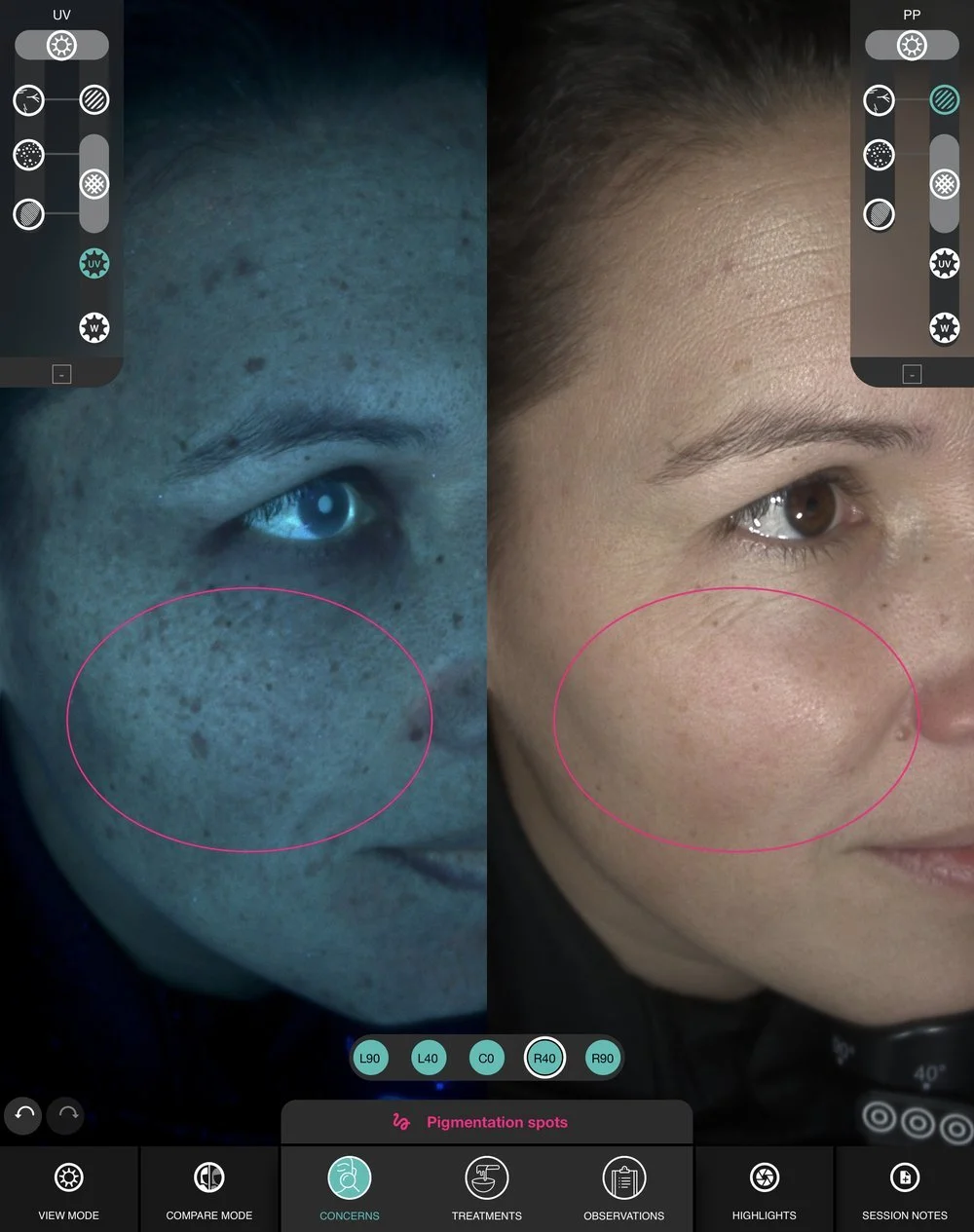
Imaging helps us explain what we're seeing, choose more appropriate treatments and document your starting point so progress can be reviewed fairly.
It's especially useful for pigmentation, where what's under the surface affects which treatment is safe.
From the clinic floor
Your imaging session.
You'll sit with your face in the device for a few minutes while images are captured. It's painless and non-invasive.
We then go through the images with you, explaining what they show and what they don't.
Tracking progress.
Many skin changes are gradual, making them hard to notice day to day. Comparing consistent images over weeks or months gives a clearer picture.
Our HIFU results guide shows how we use OBSERV 520x imaging in reviews.

Our treatment philosophy
Measured, not guessed.
Imaging keeps us honest. It helps us set realistic expectations and show you what's actually changing.
Good skin care should be measurable wherever possible.
Discover our clinic philosophy →Good questions.
What does OBSERV 520x skin analysis show?
It provides different views of visible skin characteristics, including texture, tone and some pigmentation that's less obvious in normal light.
Is skin analysis painful?
No. It's non-invasive and takes a few minutes.
Is OBSERV skin analysis a medical diagnosis?
No. It supports professional assessment and planning. Medical concerns should be reviewed by a doctor.
Is skin analysis included in The Baseline?
Yes. OBSERV 520x analysis is part of The Baseline new-client appointment.
Beauty Hub Sydney · Sydney CBD
Your skin, considered.
See your skin more clearly. OBSERV 520x analysis is included in The Baseline.
Discover The BaselineBeauty Hub Sydney
2 Market Street, Sydney CBD NSW 2000
1300 217 027
This article provides general educational information. Individual suitability, treatment sensations, results and recovery vary. All treatments are subject to professional assessment and informed consent.
